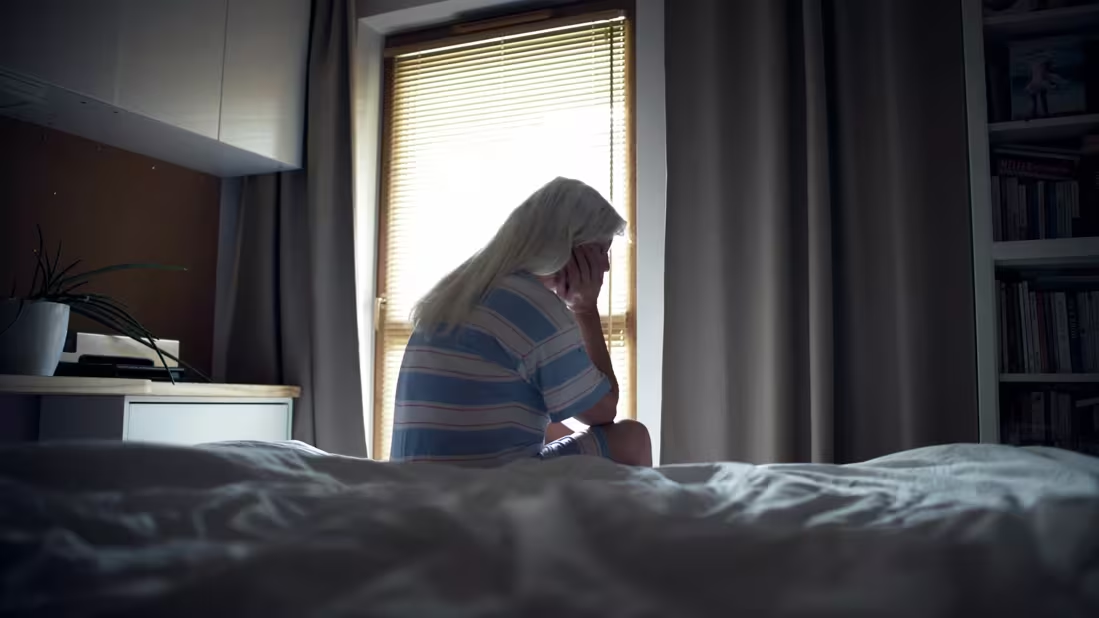
For many carers, life does not feel lived — it feels survived.
Days blur into routines. Nights are spent worrying, listening, or staying alert. Even when things are quiet, your mind rarely is. Caring becomes something that never truly switches off.
This is survival mode.
It is not dramatic.
It is not loud.
It is constant.
What Survival Mode Really Looks Like
Survival mode is not always obvious from the outside.
Carers in survival mode still function. They get up, manage responsibilities, attend appointments, and keep going. But inside, they are running on reserves that never seem to refill.
Living in survival mode often feels like:
- Getting through the day rather than living it
- Constant alertness, even during rest
- Difficulty relaxing or switching off
- Feeling emotionally flat or numb
- Existing from one task to the next
There is little space for joy, creativity, or rest. Life becomes about getting through what needs to be done.
When Caring Takes Over Your Nervous System
One of the hardest parts of long-term caring is how it affects your body and mind.
When you are responsible for someone else’s wellbeing, your nervous system stays on high alert. You are always listening. Always watching. Always anticipating what might happen next.
Even during moments of quiet, your body may not relax.
This constant state of readiness can lead to:
- Tension that never fully eases
- Shallow or broken sleep
- Difficulty concentrating
- Feeling restless or on edge
Over time, this becomes your normal — even though it is exhausting.
Rest That Doesn’t Feel Like Rest
Many carers say they are resting — but not really recovering.
You may sit down, but your mind keeps racing.
You may sleep, but wake up tired.
You may have time alone, but feel unable to enjoy it.
This is because survival mode does not end simply because tasks pause. Your system has learned to stay alert, even when there is nothing immediate to manage.
This is not a personal failure. It is a response to long-term responsibility.
Living Day to Day, Not Looking Ahead
When you are in survival mode, the future can feel distant or overwhelming.
Carers may stop making plans or thinking ahead because:
- Everything feels uncertain
- There is no energy left for imagining more
- It feels safer to focus only on today
Life becomes about managing the present moment rather than building a future. This can quietly shrink your world and sense of possibility.
Emotional Numbness as Protection
For some carers, survival mode shows up as numbness.
Feelings become muted. High emotions feel difficult to access. This numbness can feel confusing, especially for people who were once emotionally expressive.
But numbness is often a form of protection.
When emotions become too heavy or constant, the mind sometimes dulls them to help you keep functioning. This does not mean you no longer care — it means you have been coping for a long time without enough support.
Why Survival Mode Is Hard to Recognise
Survival mode often becomes invisible because it feels normal.
Carers may tell themselves:
- “This is just how things are now”
- “I don’t have time to feel”
- “I’ll rest later”
Because caring does not stop, neither does survival mode. Over time, it can be hard to imagine life feeling any different.
But constant survival is not the same as living.
The Cost of Staying in Survival Mode Too Long
Living in survival mode for extended periods can take a toll.
It may lead to:
- Emotional burnout
- Physical exhaustion
- Loss of identity
- Increased anxiety or low mood
- Feeling disconnected from life
Survival mode is useful in short bursts. It is not meant to be a long-term state.
Recognising this is not weakness — it is awareness.
Small Signs You Might Be in Survival Mode
You may be living in survival mode if:
- You feel constantly tired, no matter how much you rest
- You rarely feel fully present
- You struggle to enjoy things you once did
- Your days feel repetitive and heavy
- You feel like you are just getting through
Noticing these signs is the first step toward change.
You Deserve More Than Survival
Caring is demanding, but it should not require you to disappear into survival.
You deserve:
- Moments of genuine rest
- Space to breathe
- Support that lightens the load
- A life that includes you
Even small shifts can help ease survival mode. Awareness, compassion toward yourself, and support all matter.
A Gentle Reminder for Carers
If you are living in survival mode, you are not doing anything wrong.
You are responding to ongoing responsibility, emotional pressure, and limited support. This state makes sense — but it does not have to be permanent.
You deserve more than just getting through the day.
Why Carer’s Voice Exists
Carer’s Voice exists to name experiences like this — the ones that quietly shape carers’ lives.
Survival mode thrives when it goes unnamed. By recognising it, carers can begin to understand themselves with more compassion and less self-judgement.
You are allowed to want more than survival.
You are allowed to rest.
You are allowed to live.
This is Carer’s Voice.